

Our History
The MUSC College of Pharmacy has a rich tradition of providing exceptional education, dating back well more than a century. It's no accident that today's MUSC pharmacy, situated at the heart of an academic medical center, is a recognized leader in interprofessional education.
Mission, Vision & Values
Our Mission
The mission of the MUSC College of Pharmacy is to lead pharmacy education, scientific discovery, and patient care in South Carolina and globally.
Our Vision
Improving lives through innovative education, research, and patient care.
Our Core Values
- Compassion
- Collaboration
- Respect
- Integrity
- Innovation
Directors & Deans
| 1881 to 1884 |
|---|
| C.F. Panknin, Dean |
| 1894 to 1913 |
| Edward S. Burnham, Pharm.D., Director |
| 1913 to 1943 |
| Washington Hayne Zeigler, Pharm.D., Director |
| 1943 to 1951 |
| William Allen Prout, Pharm.D., Director |
| 1951 to 1965 |
| William Allen Prout, Pharm.D., Dean |
| 1965 to 1994 |
| William Hersh Golod, Ph.D., Dean |
| 1994 to 1999 |
| Johnnie L. Early II, Ph.D., Dean |
| 1999 to 2000 |
| John F. Cormier, Pharm.D., Interim |
| 2000 to 2004 |
| John F. Cormier, Pharm.D., Dean |
| 2004 to 2010 |
| Arnold W. Karig, Ph.D., Interim |
| 2006 to 2010 |
| Arnold W. Karig, Ph.D., MUSC Campus Dean for the S. C. College of Pharmacy |
| 2005 to 2014 |
| Joseph T. DiPiro, Pharm.D., Executive Dean for the S. C. College of Pharmacy |
| 2010 to 2015 |
| Philip D. Hall, Pharm.D., MUSC Campus Dean for the S. C. College of Pharmacy |
| 2015 to present |
| Philip D. Hall, Pharm.D., Dean, MUSC College of Pharmacy |
History of the MUSC College of Pharmacy
The MUSC College of Pharmacy traces its origins to 1881, when the Medical College of South Carolina established its first Department of Pharmacy. The department admitted its inaugural class of degree‑seeking students in 1882, but the early program was short‑lived and discontinued just two years later.
A decade later, in 1894, pharmacy education returned on a permanent foundation with the creation of the School of Pharmacy, offering the Graduate in Pharmacy (Ph.G.) degree. The school soon marked a major milestone in 1904, when Hebe E. Butler and Jane W. Colson became its first female graduates.
Throughout the 20th century, the College continued to evolve. A Bachelor of Science in Pharmacy program was established in 1936, and in 1947, Maxine Larisey, PhD, joined the faculty as its first female professor. The B.S. curriculum expanded to a five‑year program in 1960, reflecting the growing complexity of the profession.
The College also advanced in diversity and inclusion. James L. Hodges became the first African American man to graduate in 1971, followed by the first African American women—Phyllis C. Johnson‑Wolf, Janice N. Jones, and Cassandra Tisdale—in 1980.
Academic offerings broadened with the launch of the Post‑B.S. Doctor of Pharmacy program in 1973 and the PhD in Pharmaceutical Sciences in 1982, developed in collaboration with the University of South Carolina. By 1997, MUSC began transitioning to the entry‑level PharmD as the standard practice degree, graduating its final B.S. class in 1999 and its first entry‑level PharmD class in 2000.
A major structural shift occurred in 2004, when MUSC and USC integrated their pharmacy programs to form the South Carolina College of Pharmacy (SCCP). The SCCP enrolled its first class in 2006 and celebrated its first MUSC‑campus graduates in 2010.
In 2015, MUSC initiated the process to return to independent accreditation, achieving full re‑accreditation of its Doctor of Pharmacy program in 2017. The College continued to grow its identity and facilities, including the renaming of its building in 2019 to honor Michael P. Araneo.
The fist MUSC‑only PharmD class after the SCCP era graduated in 2020, and momentum continued with the groundbreaking of a new College of Pharmacy building in 2021. The College also expanded its industry partnerships, launching the MUSC SkinCeuticals Industry Fellowship in 2022, with Ndidi Chiedu as the inaugural fellow.
A transformative moment arrived in 2023, when faculty, staff, and students moved into a state‑of‑the‑art facility, followed by a celebratory grand opening in April. Today, the MUSC College of Pharmacy stands as a modern, research‑driven, student‑centered institution built on more than 140 years of innovation, resilience, and leadership in pharmacy education.
MUSC College of Pharmacy Timeline
MUSC Pharmacy Museum Exhibit
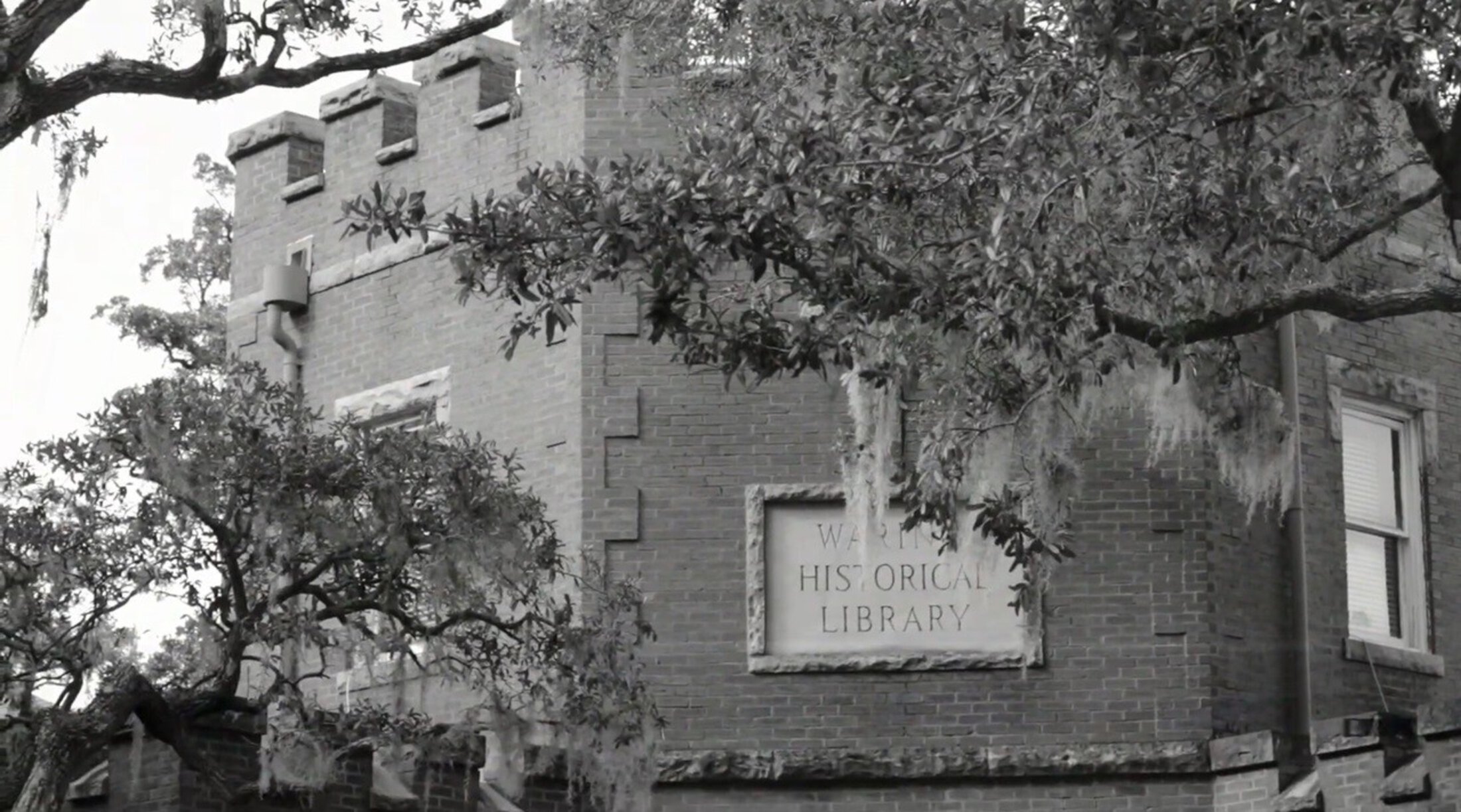
The MUSC College of Pharmacy has partnered with the MUSC Waring Historical Library to relocate the exhibits of the MUSC College of Pharmacy Alumni Association Museum as part of the college’s move from the Michael P. Araneo Building at 280 Calhoun Street to the new pharmacy facility on the MUSC Horseshoe.
In the new pharmacy facility, a large space outside the Dean's Suite has a rotating pharmacy exhibit. The exhibit displays a rotating selection of interesting artifacts culled from the museum’s collection that included a turn of the century workstation and prescriptions, photographs, early reference texts, pill machines, suppository molds, mortars, pestles made of iron, wood, ceramics, and glass, and a variety of antique balances.
Brooke Fox, university archivist and professor, has overseen the cataloging and packaging process of the museum’s materials in the Araneo Building. Many of the museum’s relics will be housed in the Waring Historical Library and/or added to its digital archives.
Contact Us
MUSC Waring Historical Library
Brooke Fox, MUSC University Archivist & Professor
foxeb@musc.edu